President's House
In the shadow of America’s most revered symbols of liberty, the sudden removal of the slavery exhibit at Philadelphia’s President’s House site has left more than an empty space—it has sparked a daily act of public remembrance. Where interpretive panels once confronted the paradox of freedom and bondage within George Washington’s household, residents now cover the bare walls with handwritten messages, refusing to let the story disappear. Though the papers are repeatedly taken down, new ones quickly take their place, transforming the site into a living memorial and a quiet protest. As the City of Philadelphia challenges the removal in court and a ruling approaches, the question lingers: can history ever truly be erased, or does the collective will to remember ensure it endures?
In the historic heart of Philadelphia, where visitors gather beneath the enduring symbols of American independence, the absence of a once-powerful exhibit now speaks almost as loudly as the story it told. The President’s House site—located in the shadows of the Liberty Bell and just steps from the place where the Declaration of Independence was debated—was long recognized as a space that confronted one of the nation’s earliest contradictions: the coexistence of slavery and freedom at the founding of the United States.
The site marks the location where Presidents George Washington and John Adams lived and worked during Philadelphia’s tenure as the nation’s capital. Within these walls, the machinery of a new democracy took shape even as enslaved people labored in the household. For years, the exhibit invited visitors to wrestle with that paradox, presenting an unvarnished look at the complexity of American origins.
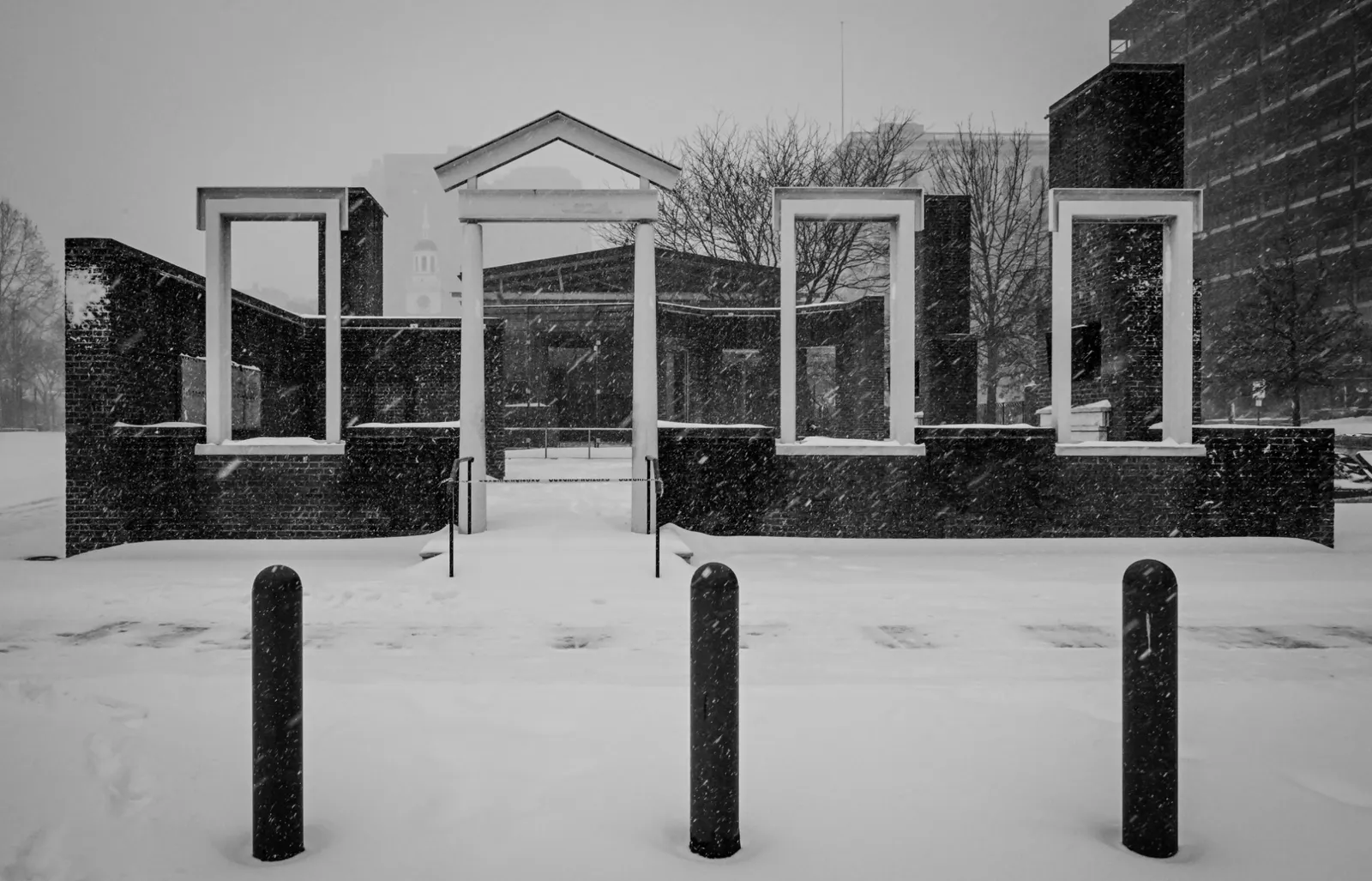
Seeing the remnants of the exhibit for the first time is shocking. Where interpretive panels once stood, there is now an unsettling emptiness—an absence that feels deliberate. The removal followed President Trump’s executive order of March 27, 2025, which led to the dismantling of the display examining slavery at the site.
Yet the silence has not gone uncontested.
Philadelphia residents have responded by covering the bare surfaces with sheets of paper, transforming the space into a living memorial. Visitors pause to write reflections, tributes, and calls for remembrance—messages that assert the importance of telling the full American story. According to the National Park Service, which manages the site, the papers are often taken down throughout the day. Still, the walls rarely remain empty for long. By morning or afternoon, new notes appear, layered one over another, evidence of an ongoing public dialogue.
The evolving display has turned the site into something dynamic rather than erased—a reminder that history is not solely curated by institutions but also carried forward by communities determined to bear witness.
The controversy has also moved into the courts. The City of Philadelphia filed a lawsuit challenging the removal, and a judge is expected to rule on the case on February 2, 2026. The decision could shape how the nation interprets and presents difficult chapters of its past within federally managed historic spaces.
For many local leaders, the stakes extend far beyond a single exhibit.
“Removing the exhibits is an effort to whitewash American history. History cannot be erased simply because it is uncomfortable. Removing items from the President’s House merely changes the landscape, not the historical record,” said Philadelphia City Council President Kenyatta Johnson.
His words echo a broader question unfolding across the country: Who decides how history is told, and what responsibility exists to confront the contradictions embedded within it?
At the President’s House site, the physical panels may be gone, but the tension between memory and omission remains visible. Each handwritten note taped to the wall becomes an act of preservation—a declaration that while landscapes can be altered, the collective demand to remember endures.